I notice this every time I drive past a For Sale sign in our neighborhood. The house looks interesting. I read the agent’s phone number, sometimes the listing website printed underneath, and then the light turns green or my exit comes up. By the time I get home, the street name is gone and so is the moment. To actually see the listing I have to remember the agent’s name, search the address, navigate the wrong listing site, and find the property among the auto-generated suggestions. Most of the time I don’t bother.
That gap between curiosity and follow-up is where most drive-by interest dies. A QR code on the yard sign closes it. Scanned from the car window at a stop sign, it opens the full listing on the buyer’s phone (photos, price, virtual tour, every detail they need) before they’re back on the road. Most yard signs in my area still don’t have one, which is part of why this article exists.
A QR code on a yard sign lets drive-by buyers scan and instantly view the full listing on their phone, with photos, pricing, and virtual tour links. Generate one from your listing URL, print it at least 3 inches square for outdoor scanning, and test from 10+ feet away before sending to print.
Why this matters from both sides
For buyers, a yard sign QR code means the property stops being a memory exercise. The listing opens immediately, gets saved to the camera roll or shared with a partner, and becomes a possible showing later that week instead of a half-remembered street.
For agents, the same code means more drive-by interest converts into actual listing views. The buyer who would have forgotten the address now has the listing in their phone history. Showings get scheduled. Inquiries land in your inbox with property context already attached because the QR sent them through a tracked listing.
There’s also a signaling effect. A yard sign with a clean QR code reads as organized and accessible. It suggests the agent runs a smooth process before the first call.
Where the codes work best
Yard signs are the highest-leverage placement. Buyers driving past can scan from their car window if the code is large enough. This is the moment the article is mostly about.
Open house flyers benefit too. Visitors take a flyer, leave, and forget where they put it. A QR code linking to the saved listing keeps the property in their phone even after the paper is lost.
Print advertising (newspaper listings, neighborhood magazines, direct mail postcards) turns passive viewing into active engagement. The code converts a magazine ad into a real listing view.
Window displays on commercial spaces or storefront-style properties let after-hours passersby still access the listing. The property is locked, but the information isn’t.
Business cards handed out at networking events or open houses can carry a QR code linking to the agent’s full active listings page. Useful for buyers who want to see what else the agent represents.
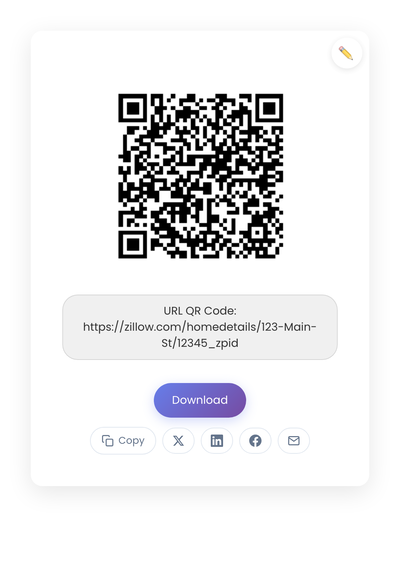
A static QR code with a property listing URL embedded directly. No subscription is in the path, so the yard sign stays scannable across the full listing window without anyone managing it.
What the code should link to
The destination matters as much as the code. A few options work, each with a different fit.
The listing page on Zillow, Realtor.com, or the agent’s own site is the most common destination. Buyers see photos, descriptions, school ratings, and can request more information from the same page.
A virtual tour or 3D walkthrough works better than a static listing when the property has been professionally shot in video. The buyer who scans a code on the yard sign and lands inside a video tour gets a much stronger first impression than the same buyer scrolling photos.
A simple landing page with multiple options (view photos, schedule a showing, download a PDF brochure, contact the agent) handles cases where different buyers want different things. This works particularly well for higher-end listings where buyers might be researching at different stages.
A pre-filled contact link (a tel: URL that opens the dialer, or a mailto: with subject pre-filled) reduces friction for buyers who want to ask a question immediately. Some agents combine this with a listing page link as two codes side by side: “See it” and “Ask about it.”
Static vs dynamic, for listings
For most listings, static is the right choice. The property stays on the same listing URL until sold, and you want the code on your yard sign to keep working through whatever sale period the market gives you, without subscription fees in the way.
Dynamic codes make more sense for agents who reuse the same yard signs across multiple listings and need to swap destinations without reprinting. If you’re constantly cycling signs through new properties and want one code per sign, the editability earns its keep. For one-listing-per-sign workflows, static is simpler and cheaper. The static-vs-dynamic comparison for printed signage explains the difference in detail.
Design for outdoor scanning
Yard signs face challenges most QR code placements don’t. Three things matter most.
Size for distance. Buyers often scan from the car window or from across a sidewalk. The code needs to read from at least 10 to 15 feet. Print at 3 to 4 inches square minimum; larger if the sign itself is large. Test before sending to print by scanning from the actual distance buyers will use.
Weather resistance. Outdoor codes face rain, sun, and temperature swings over weeks or months. Use UV-resistant printing and consider laminating the code area or building the sign with a printed-then-coated process. Fading or peeling reduces scan reliability over time.
Outdoor contrast. Dark code on a light background performs best in bright sunlight, which can wash out lower-contrast color combinations that look fine indoors.
A short label like “Scan for full listing” or “Scan for photos” right next to the code removes the small hesitation moment that loses casual scans.
Why yard-sign scans miss
A yard sign works against you in ways an indoor placement never does.
Codes printed too small. A code that requires walking up to the sign defeats the entire point. The driver who has to get out and approach gives up before scanning.
Linking to pages that change URLs. Some listing platforms change URLs when properties are updated, relisted, or marked as sold. Confirm the URL is stable before committing to a print run, and use a redirect on your own domain if you suspect the destination might move.
Forgetting mobile optimization. The destination page must work on phones. Slow loading times or desktop-only layouts frustrate buyers who scanned from the car expecting a fast result.
Not testing in real conditions. The code that scans cleanly under the desk lamp can fail in direct afternoon sunlight or in the early-evening lighting that drive-by buyers actually face.
Using QR services that add expiration dates or scan limits to “free” codes. For something as important as a property sale, use a static generator that doesn’t depend on a service staying paid.
Creating the code
Generate the code from your listing URL on StackQR and download the SVG. Print at three inches square minimum for a standard yard sign, larger for the bigger signs that sit further from the curb. The tutorial covers error-correction options that matter for outdoor signage, because UV fade and rain spotting can damage parts of a code over a months-long listing.
Test the printed result at realistic distances. A code that scans fine at arm’s length might fail from across a sidewalk. Scan from where buyers actually scan from: a car at a stop sign, a sidewalk across the street, the porch during an open house.
Workflow integration
For each new listing, finalize the listing on your platform, confirm the URL is stable, generate the QR code, include it in yard sign designs and open house materials, and test before production printing.
For open houses, print flyers with the code linking to the listing. Visitors scan instead of taking paper that will get lost in the car. They leave with the listing already saved on their phones, which means follow-up is one tap away.
When a property sells, the QR codes become inactive if they point at the listing. Some agents redirect them to a “sold” page that explains how the sale went and links to the agent’s other current listings. That turns old signs into marketing for future business.
When QR codes earn their place
QR codes help when buyers encounter properties in physical spaces: yard signs in high-traffic areas, open houses with foot traffic, print campaigns in neighborhoods, properties that draw drive-by interest. They matter less when all marketing happens online, when the property is private or off-market, or when the buyer is already working closely with the agent.
A QR code on a yard sign won’t sell a house on its own, but it shortens the path between a passing glance and the listing photos. Given that the code costs nothing to generate and adds no recurring expense, the ROI threshold is one extra serious inquiry per listing.